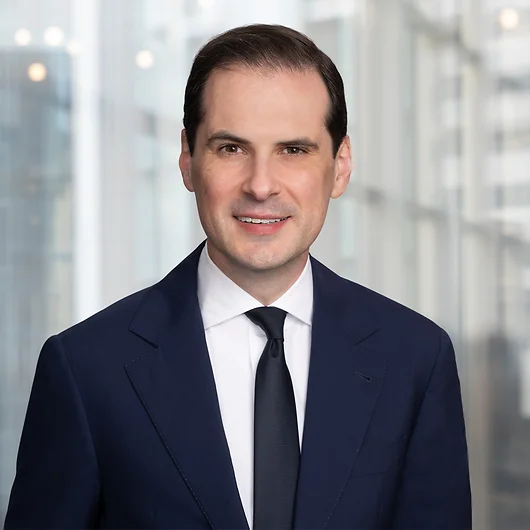
Richard H. Hughes, IV, Member of the Firm in the Health Care & Life Sciences practice, in the firm’s Washington, DC, office, authored an article in STAT News, titled “I Was a Moderna Exec When the Covid Vaccine Rolled Out. That Spirit of Possibility Is No More.”
Following is an excerpt:
Editors’ note: Shortly after this piece was published, Moderna announced that the FDA had reversed its decision and will review Moderna’s application for a new flu vaccine.
On Dec. 30, 2020, I took the first of two flights to Boston, double-masked and anxious, to roll up my sleeve at Moderna’s manufacturing site just outside the city.
A year earlier, I hadn’t even known the company existed. Now, I was an executive there, part of a team responding to a global catastrophe.
After the nurse administered my first dose, we looked at each other — both of us a little teary-eyed — and said thank you. It was a moment of profound human connection, born of a year of collective trauma and a sudden, palpable sense of hope.
I remember standing in that plant outside Boston — one Moderna had fortuitously built less than two years before the pandemic — looking at massive containers of vaccine material. I remarked to our head of manufacturing that the number of doses we were producing in that one facility was astonishing.
While preparing for a visit from the governor, we talked about the highly skilled jobs we were creating. The energy in our labs near Kenmore Square was electric. We drew great scientific minds from the very epicenter of discovery in Cambridge, benefiting from a unique proximity to the world’s leading research institutions.
It was clear that the science, the talent, and the commonwealth were in a perfect, symbiotic embrace. It felt right to me that this was all happening in Massachusetts, where some of the earliest advancements in American vaccination occurred.
In our conference rooms, I sat with the executive team making decisions to accelerate programs that had been dreams for decades. Because we had become a revenue-generating company, we could finally “de-risk” the pipeline and move vaccines forward from the lab into trials and closer to the clinic.
We invested in a vaccine for cytomegalovirus (CMV), an underrecognized virus that is the leading cause of infant hearing loss. Perhaps most moving was the promise of an mRNA vaccine for respiratory syncytial virus (RSV). For decades, research into RSV had been stymied by past failures, leaving no way to prevent the thousands of infant respiratory deaths that occur worldwide every year. We had hope that our platform technology could be used to respond rapidly to emerging disease threats and, once its safety and efficacy were well established, unlock the ability to move through regulatory processes with greater speed to save lives.
But today, that spirit of possibility is being replaced by a chilling reality. All of that hope is now hitting a wall of regulatory unpredictability and malice as policy.
The FDA recently refused to review Moderna’s application for its mRNA flu vaccine. The decision was framed as technical — centered on questions about trial design and comparator standards — but that is a pretext.
It is part of health secretary Robert F. Kennedy Jr.’s broader campaign to undermine vaccine confidence and weaken longstanding vaccine recommendations. In his first year as our nation’s chief health officer, he has promoted debunked vaccine safety claims, downplayed the harms of infectious diseases, attacked doctors and vaccine makers, and dismantled key elements of federal vaccine policy. …